
The Hidden Cost of Dirty Nozzles: How Vacuum Loss Drains SMT Line Throughput
The Hidden Cost of Dirty Nozzles: How Vacuum Loss Drains SMT Line Throughput
The Pattern of Misdiagnosis
A Pick and Place machine on a mid-volume SMT line starts showing an intermittent pick error pattern. Component retrieval from one Feeder position fails once every 15-20 cycles. The operator adjusts the Feeder pick height. No improvement. The technician runs vacuum calibration. Temporary improvement, then the pattern returns. Shift supervisor logs it as a Feeder issue and schedules replacement.
Three hours of troubleshooting. Fifty boards sent to AOI for extra scrutiny. One disassembled Nozzle under a microscope reveals the real cause: flux residue inside the Nozzle shaft, invisible to standard visual inspection, reducing airflow volume by approximately 25%.
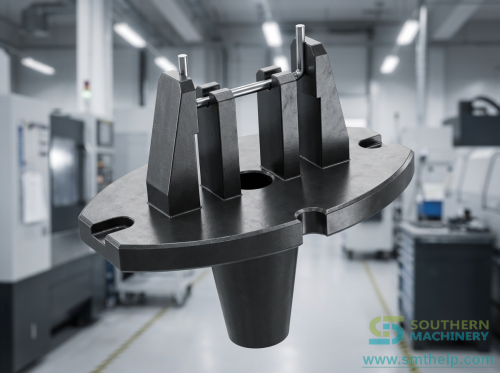
SMT Pick and Place Nozzle — contamination inside the shaft bore is invisible to standard visual inspection.
This diagnostic pattern is more common in SMT factories than most production teams realize. The Nozzle — the single point of contact between machine and component — is rarely the first thing checked when placement defects appear. And because vacuum loss from contamination is gradual (not sudden), it accumulates into throughput degradation that looks like a machine or process problem, not a consumable issue.
From field observations across multiple EMS facilities in the Pearl River Delta, the most frequently overlooked variable in placement yield optimization is the condition of the Nozzles currently mounted on the machine head. Not the program, not the Feeder alignment, not the solder paste — the Nozzle itself.
The Invisible Gap
The mechanism is straightforward but often misunderstood. A Pick and Place machine achieves reliable component pickup through vacuum flow at the Nozzle tip. The machine's vacuum sensor monitors pressure at the pump side, not at the tip. When flux residue, solder paste dust, or general particulates accumulate inside the Nozzle shaft — typically a sub-1mm bore — airflow is restricted.
The machine still sees adequate vacuum at the sensor. But at the Nozzle tip, where it matters, effective holding force is reduced. Components that should be picked in 50ms require 70-90ms. Some fail entirely. The machine compensates by extending pick time, which directly reduces effective CPH.
The scale of this loss is hard to measure on the factory floor because it does not show up as a single defect event. Instead, it appears as:
- Slightly elevated pick error counts spread across multiple Nozzle positions
- Reduced placement speed on fine-pitch components (0201, 0402, mini-BGA)
- Higher AOI fail rates on the first boards after a new setup
- Premature rubber tip wear from operators over-tightening vacuum settings to compensate
In production environments running three shifts, a 1-2% effective CPH loss per machine is often present without triggering any alarm. Multiplied across 10 machines over 6,000 operating hours per year, the lost placement capacity is measurable in millions of components.
The replacement cost of a Nozzle rubber tip is small. The replacement cost of the production time lost to unrecovered vacuum is not.
How Nozzle Cleaning Changes the Equation
Addressing this gap does not require a machine upgrade or a line rebuild. It requires shifting Nozzle maintenance from reactive (clean when defects spike) to scheduled (clean on a regular cycle with the right equipment).
The method matters. Manual wiping with alcohol wipes removes surface flux from the Nozzle exterior but does little to clear the internal shaft — where the airflow restriction actually occurs. Compressed air blow-off displaces loose particles but does not dissolve cured flux residues.
Automated Nozzle cleaning systems use a combination of ultrasonic cavitation and pressure flushing to reach the interior surfaces that manual methods miss. Equipment such as Southern Machinery's S-6200 Nozzle Cleaning Machine processes up to 30 Nozzles per cycle in 10-20 minutes, using 40 kHz ultrasonic action in a temperature-controlled cleaning bath. A dual-stage filtration system (10 micron + 0.5 micron) keeps the cleaning solution effective across multiple cycles, and the benchtop design fits in any maintenance area without line integration.

Automated cleaning equipment — ultrasonic cavitation and pressure flushing restore Nozzle vacuum performance.
The repeatable result: Nozzle vacuum performance restored to levels within factory specification, and rubber tip service life extended by an estimated 30-50% compared to manual-only cleaning programs.
Additionally, having a spare Nozzle rotation set allows cleaning to happen without interrupting production. The dirty set is swapped out, cleaned, and returned to inventory while production continues on the backup set. This is a low-capital change that can be implemented within a single shift change.
For factories running high-volume production with fine-pitch components, or any facility operating three shifts, the argument for scheduled Nozzle cleaning is less about defect reduction and more about throughput protection. The cleaning cycle time of 10-20 minutes per batch is negligible compared to the cumulative CPH loss from running contaminated Nozzles over weeks or months.
When Scheduled Nozzle Cleaning Makes Sense
Not every factory needs automated Nozzle cleaning. The decision depends on several factors:
High applicability:
- Lines running 0201, 0402, or mini-BGA components where pick reliability is critical
- Three-shift operations where Nozzle inspection intervals are naturally longer than ideal
- Facilities with 50+ Nozzles in active rotation across multiple machine brands
- High-volume production where 1% throughput loss equals significant annualized cost
Lower applicability:
- Low-volume prototype lines with very few component changes per day
- Single-shift manual inspection programs with documented Nozzle condition logs
- Facilities where total Nozzle count is under 20 and replacement cost is negligible
The economic logic follows a simple pattern: compare the annualized cost of your current Nozzle replacement program plus the estimated CPH loss from contaminated Nozzles against the one-time investment in cleaning equipment. For most mid-to-high-volume EMS facilities, the break-even point falls within 6-12 months.
One aspect worth considering: retrofit and compatibility. A dedicated Nozzle cleaning unit is independent of the Pick and Place machine brand. It does not require SMEMA integration, MES connectivity, or production line modification. The same cleaning machine can handle Nozzles from Panasonic, Fuji, Yamaha, Juki, ASM, and Samsung.
A 5-Minute Nozzle Management Audit
The fastest way to determine whether your line has a Nozzle cleaning gap is to run a quick audit. This takes 5 minutes and requires no special tools:
- Count the active Nozzles currently mounted on each Pick and Place head
- Note the last documented cleaning date for each Nozzle (if one exists)
- Check current vacuum readings at the Nozzle tip using your machine's calibration routine
- Compare against the factory specification for each Nozzle type
- Inspect 3-5 Nozzles under magnification for internal residue — insert a fine wire or use backlighting
If vacuum readings are consistently below spec, or if more than 30% of your Nozzles have no cleaning date recorded, you likely have a recoverable throughput loss in your line.
Nozzle Vacuum Loss Calculator
Estimate the annual CPH loss from contaminated Nozzles and savings from a scheduled cleaning program. Fill in your numbers below.
| Parameter | Your Value |
|---|---|
| Number of Pick and Place machines | |
| Rated CPH per machine | |
| Estimated vacuum loss (%) | |
| Operating hours per year | |
| Cost per lost CPH hour ($) |
Annual CPH Lost: 0 placements
Annual Production Cost Lost: $0
Estimated Savings with Cleaning Program (70% recovery): $0
This audit and calculator take 5 minutes. No sales call required.