
When Should You Consider Auto Insertion for THT Components? A Condition-Based Decision Framework
When Should You Consider Auto Insertion for THT Components? A Condition-Based Decision Framework
If you manage a PCB Assembly line that still relies on manual THT insertion, you have probably asked yourself the same question at some point: “When does it actually make sense to automate this?”
The answer is not straightforward. Auto insertion machines can deliver significant labor savings and throughput improvements in certain production environments — but they are not a universal solution. The payback period, typically in the range of 12 to 24 months depending on labor cost, product mix, uptime, and current line setup, varies considerably from one factory to another.
This article is not going to tell you that you should automate. Instead, it offers a framework to help you evaluate your own situation.
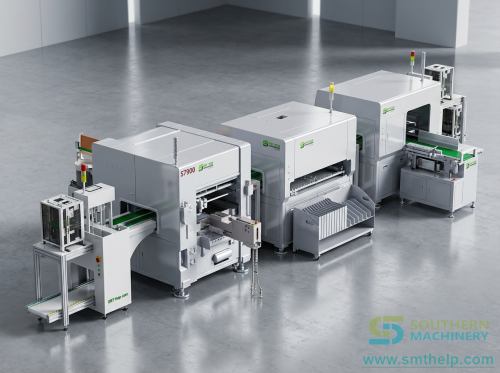
Start with Three Questions
Before looking at any machine specs or pricing, you need clarity on three things:
1. How much labor is your THT insertion actually consuming?
Not what you think it should be — what it actually is. If you have time study data or can run a simple observation over one full shift, you will have a more honest baseline than most factories start with.
2. Which products are driving the most manual insertion time?
Not total volume. A medium-volume board with 30 THT components can consume more labor than a high-volume board with 8. The product mix matters more than the overall output.
3. Is the insertion bottleneck limiting your overall throughput?
This is an important distinction. Hand insertion being expensive is a cost problem. Hand insertion preventing you from shipping more boards is a capacity problem. The two lead to very different investment priorities.
If you cannot answer at least two of these questions with data, it is worth spending a week collecting numbers before moving further.
Auto Insertion Is Not Always the Answer
A common misconception is that replacing manual workers with machines will automatically reduce cost. In some production environments it does. In others it creates a different kind of problem — equipment that is underutilized because the product mix changes too frequently, or because the components being inserted do not suit the machine’s Feeder types.
Another misconception is that auto insertion is mainly for high volume only. While volume is a factor, there are mid-volume factories running auto insertion successfully because their product mix is stable enough that changeover time does not eat into the savings. And there are high-volume factories where auto insertion would not make sense, because their THT components are primarily odd-form parts that require flexible handling.
The decision is less about volume alone and more about the combination of volume, component type, and product stability.
A Condition-Based Decision Framework
Instead of asking “Should I automate THT insertion?”, a more useful question is: “Which of these conditions apply to my line?”
Condition 1: High Volume, Stable Product Mix
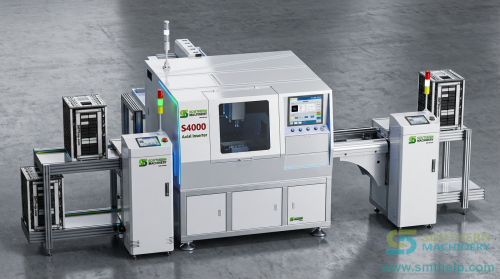
This is the scenario where the ROI case is most straightforward. If you are producing the same boards in volumes of several thousand per batch and the product mix changes no more than a few times per month, radial and axial auto insertion machines can typically achieve 6,500 to 13,000+ CPH depending on the component type and machine configuration. In this condition, a single operator can manage up to four machines, which directly replaces manual insertion labor. The typical payback period of 12 to 24 months is realistic here, assuming consistent production volume and stable labor costs.
Condition 2: Odd-Form Components Are a Significant Portion of Your THT Workload
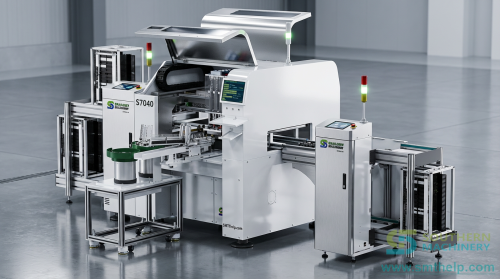
If your boards include non-standard components such as transformers, connectors, relays, or large electrolytic capacitors, standard radial or axial insertion machines may not be the right fit. In this case, an odd-form insertion machine is worth evaluating — but only if the volume of odd-form components per board justifies the investment. Some factories find that partial automation (odd-form insertion for high-volume products, manual for the rest) works better than full automation.
Condition 3: Mixed Products, Small to Medium Batches, Frequent Changeovers
This is the most challenging scenario. The savings from automation can be partially offset by the time spent on changeovers. In this condition, some factories choose to start with offline (standalone) auto insertion rather than inline integration. This allows them to use the machine for the products where it makes sense, without committing to a full inline setup. Others begin with a single machine for one product family and expand as the process proves itself.
Condition 4: You Are Already Planning a Line Upgrade in Other Areas
If you are already evaluating a new Pick and Place machine, a Reflow Oven, or a Wave Soldering upgrade, adding a THT auto insertion machine to the same investment cycle may change the overall payback calculation. This is because the combined labor savings across the SMT and THT sections can be evaluated together, and the shared costs (operators, training, maintenance) are distributed across more equipment.
Condition 5: You Need to Reduce Dependency on Manual Labor Availability
In regions where skilled manual insertion operators are becoming harder to find and retain, the decision may not be purely about direct cost comparison. In some factories, the primary driver is not labor cost per hour but the operational risk of not being able to staff the line consistently. A machine that requires one operator instead of several manual workers on a shift can address that risk, even if the pure wage comparison is less dramatic.
Common Pitfalls to Avoid
Underestimating changeover time. A machine running at 10,000 CPH does not help if it is idle for two hours while you switch from one board type to another. Make sure your changeover process is factored into the payback calculation, not just the running speed.
Overestimating utilization. In practice, a realistic utilization rate of 70 to 80 percent is common in the first year, especially while operators and maintenance staff are building experience with the equipment.
Skipping the proofing step. Before committing to a specific machine type, it is sensible to have your actual boards and components evaluated. Many equipment suppliers offer free proofing — where they run your boards on their machines to confirm compatibility and cycle time. This reduces the risk of buying a machine that does not fit your actual production needs.
A Practical Starting Point
If you are considering auto insertion, a practical first step is to walk through a readiness assessment using your own production data. This typically involves mapping out your current manual insertion labor cost by product, identifying which component types dominate each board, and estimating what utilization you could realistically achieve.
Some equipment suppliers provide a structured template for this, along with free line concept design and consultation. Southern Machinery, for example, offers a free consultation service including a 5-Condition Readiness Checklist that covers the evaluation points discussed in this article. Machines such as the S3010A (vertical radial insertion) and S4000 (horizontal axial insertion) are examples of auto insertion equipment in this category.
Download the 5-Condition Readiness Checklist
5-Condition Readiness Checklist
Use this checklist to evaluate whether your production line is ready for THT auto insertion.
Part A: Self-Assessment
Condition 1 — High Volume, Stable Product Mix
- I produce the same board types in batches of several thousand or more
- My product mix changes fewer than 5 times per month
- My THT components are mostly radial or axial (capacitors, resistors, diodes, LEDs)
Condition 2 — Significant Odd-Form Components
- My boards contain transformers, relays, connectors, or large electrolytic capacitors
- These odd-form components make up over 30% of total THT placement per board
- I currently use manual workstations or custom jigs for these parts
Condition 3 — Mixed Products, Small Batches, Frequent Changeovers
- My average batch size is under 500 boards per product
- I change product setups more than 10 times per month
- My THT components vary significantly between product types
Condition 4 — Planned Line Upgrade in Other Areas
- I am evaluating a new Pick and Place, Reflow Oven, or Wave Soldering machine
- I expect to hire or train additional operators within the next 12 months
- My current line has a mix of manual and semi-automatic THT stations
Condition 5 — Labor Availability Risk
- Skilled manual insertion operators are difficult to hire or retain in my region
- I have lost production capacity due to labor shortages in the past 12 months
- My labor cost per board has increased more than 15% year-over-year
Scoring Guide:
- 3+ checks in Condition 1 → Strong candidate for radial/axial auto insertion
- 2+ checks in Condition 2 → Consider an odd-form insertion machine
- 3+ checks in Condition 5 → Operational risk alone may justify automation
- Mixed results across conditions → Try Part C below
Part B: Quick ROI Estimator
Estimate payback range based on three variables:
| Variable | Low (Longer Payback) | Medium | High (Shorter Payback) |
|---|---|---|---|
| Monthly THT board volume | Under 50,000 | 50,000 – 150,000 | Over 150,000 |
| Manual insertion labor cost / board | Under $0.15 | $0.15 – $0.40 | Over $0.40 |
| Product changeover frequency | Over 15 / month | 5 – 15 / month | Under 5 / month |
Estimated payback range:
- Mostly low variables → 18 – 24 months
- Mixed variables → 12 – 18 months
- Mostly high variables → 8 – 12 months
Note: Actual payback depends on uptime, local labor conditions, and component mix. Use this as a rough guide, not a guarantee.
Part C: Scenario Matcher
Match your dominant production pattern:
| If your line looks like this | Your likely starting point |
|---|---|
| High volume, stable mix, mostly radial/axial → | Radial or axial auto insertion machine (e.g. S3010A or S4000) |
| Significant odd-form, moderate volume → | Odd-form insertion machine, possibly offline |
| Mixed products, small batches → | Start with a single offline machine for one product family |
| Primarily labor-risk driven → | One machine to replace the highest-labor product first |
| Already upgrading other line sections → | Add auto insertion to the same investment cycle |
About the author: This article was prepared by the technical team at Southern Machinery, a Shenzhen-based SMT/THT equipment manufacturer with 20+ years of industry experience. We specialize in auto insertion machines, Pick and Place, Wave Soldering, and custom SMT solutions.