
Hand Soldering vs Wave Soldering: Where Your PCBA Quality Actually Differs
Hand Soldering vs Wave Soldering: Where Your PCBA Quality Actually Differs
Every production engineer managing a mixed THT line has asked this question at some point: if my hand solder operators are trained to IPC standards, how much quality am I really gaining by running boards through a Wave Soldering machine?
The honest answer, from field observation across dozens of EMS factories in Shenzhen and beyond, is that the gap is larger than most engineers measure — and it rarely shows up in first-pass yield data alone. It shows up in field returns.
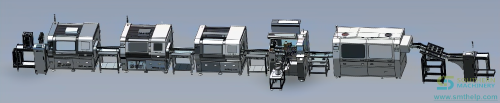
The Consistency Problem That Skill Cannot Solve
Hand soldering, even at its most skilled, is a human-controlled thermal process. The operator controls iron tip temperature (within a range), contact time, solder feed rate, and flux application. Each joint gets a slightly different thermal profile. Studies across production environments consistently show that even trained IPC Class 3 operators produce joint-to-joint temperature variation of 15-25 degrees C, and contact time variation of 0.5-1.5 seconds per joint.
A Wave Soldering machine, by contrast, applies a fixed thermal profile to every board. The preheat ramp, peak temperature, contact time with the wave, and cooling rate are PLC-controlled parameters. Every board sees the same conditions. The first board of the day and the five-hundredth board of the shift are metallurgically identical — provided the machine is properly profiled and maintained.
This is not an argument against skilled operators. It is a structural observation: Wave Soldering removes a source of variability that human skill cannot eliminate, regardless of training level.
The Hidden Rework Loop
The cost of hand soldering inconsistency is not always visible at the ICT or AOI stage. Many marginal joints — those that pass electrical test but have borderline wetting angles, insufficient fillet height, or micro-voiding — survive in-circuit test and functional test only to fail in the field under thermal cycling or vibration.
Field return data from power supply and LED lighting manufacturers (two sectors where THT component density remains high) shows a pattern: boards with a high proportion of hand-soldered THT joints return at rates that are rarely traced back to the soldering method itself. The root cause is often categorized as “component failure” or “unknown” when in fact the solder joint lacked the consistency of a Wave Soldering process.
Dual-wave Wave Soldering addresses this at the process level. The turbulent first wave — a narrow, high-pressure jet of molten solder — forces solder into tight plated-through holes that hand soldering often under-fills. The laminar second wave then removes bridges and ensures complete fillet formation around every lead. This two-stage approach produces joints with consistent wetting angles, full barrel fill, and repeatable fillet geometry — every board, at conveyor speeds of 300-1800 mm/min.

When Does Hand Soldering Still Make Sense?
No one is proposing a factory without hand soldering stations. Prototype runs, rework, low-volume production, and odd-form components that cannot survive the solder pot all require hand soldering. The decision framework is not “hand vs machine” across the board — it is about threshold volume and joint criticality.
A practical rule of thumb from production line experience: any THT joint count above 20-30 per board, at volumes above 500 boards per month, is a strong candidate for Wave Soldering. Below these thresholds, the setup and profile validation time may not justify the transition. For mixed-technology boards where SMD components run through Reflow Oven and THT components are added afterward, Wave Soldering becomes a throughput enabler — it pulls THT assembly out of the manual bottleneck and into the flow line.
The economic logic is also worth examining. A Wave Soldering machine, such as Southern Machinery’s S-WS350B or the larger S-WS450 for boards up to 450mm width, represents a capital investment that is a fraction of what most factories spend annually on hand solder rework, inspection labor, and field replacement. The S-WS350B, for example, runs on a PC+PLC control system with Siemens PLC and Dell computer, 3-zone PID preheating delivering 15KW of controlled preheat, and a full titanium solder pot for lead-free alloys operating at +/- 1-2 degrees C accuracy. Running power consumption is approximately 2.5 kW — modest for a machine that handles 50-350mm wide PCBs at 300-1800 mm/min.
The retrofit path is also straightforward. Most lines already have conveyor infrastructure. Adding a Wave Soldering machine between the auto insertion line and the post-solder test station can be done without reconfiguring the factory layout. SMEMA-compatible handshake protocols make integration with existing SMT equipment a plug-and-play operation.

What Lead-Free Changes
The transition to lead-free alloys (SAC305, SAC405) has widened the quality gap between hand and Wave Soldering. Lead-free solders require higher operating temperatures (260-275 degrees C vs 230-250 degrees C for Sn63Pb37), narrower process windows, and more aggressive flux chemistry. Hand soldering lead-free joints is technically more demanding — the higher temperature shortens tip life, increases dross formation, and requires tighter operator control over contact time to avoid component damage.
Wave Soldering machines designed for lead-free operation, such as those with full titanium solder pots and multi-zone PID preheat, handle these parameters as a matter of routine process control. The S-WS350B’s preheat temperature range (room temperature to 250 degrees C) and tin stove precision (+/- 1-2 degrees C) are designed for lead-free alloy behavior. The dual-wave configuration — turbulent followed by laminar — is particularly effective with lead-free solders that have lower wetting force than their leaded equivalents. Without the turbulent first wave, lead-free solders are more prone to skipping and incomplete fill in dense THT layouts.
Five-Minute Solder Line Audit
You can evaluate your own line’s soldering method mix in under five minutes. Answer these four questions:
- How many THT boards does your line produce per shift?
- What is your current rework rate on THT solder joints?
- What percentage of your field returns involve THT components?
- What is your estimated cost per hand-soldered joint (operator time, consumables, inspection)?
Take the answers and apply them to this simple formula: if your annual rework cost on THT joints exceeds 60% of a Wave Soldering machine’s capital cost, the invest-back period is under 18 months — and the quality improvement is permanent.
Companion Resource: Solder Line Quality Audit Worksheet — Step-by-step audit instructions, reference CPH tables, annual savings formula, and IPC-A-610 quality criteria.
Southern Machinery supplies Wave Soldering equipment (S-WS350B, S-WS450), auto insertion machines, and full THT line solutions from Shenzhen, China. For a custom evaluation of your line’s solder quality, reach out to Jason Wu at jasonwu@smthelp.com.
<!--more-->